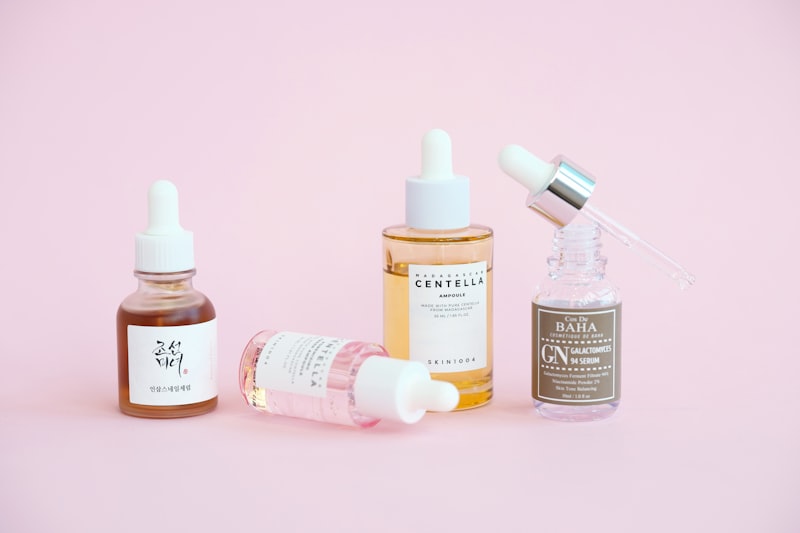
K-Beauty Essentials: My Favorite Korean Skincare Products
An honest review of the best Korean skincare products I've tested. From essences to sheet masks, these are the K-beauty items that actually work.
By Rita Almusa, Licensed Master Esthetician — 20+ years of experience
Introduction
K-beauty (Korean beauty) has completely transformed my skincare routine, and I’ve been obsessed ever since! Korean skincare emphasizes hydration, prevention, and a multi-step routine. Today, I’m sharing my absolute favorite K-beauty products that I’ve been using consistently and genuinely love.
What Makes K-Beauty Different?
Korean skincare is known for:
- Layering hydration - Multiple steps to maximize moisture
- Prevention over correction - Focus on maintaining healthy skin
- Innovative ingredients - Snail mucin, fermented ingredients, botanical extracts
- Gentle formulations - Generally more gentle than Western skincare
- Affordability - High-quality products at reasonable prices
The Philosophy Behind the Routine
What separates K-beauty from a lot of Western skincare marketing is the underlying mindset: rather than reaching for one “hero” product to fix a specific concern after it appears, the approach is to build a consistent, layered routine that keeps skin balanced enough that concerns are less likely to show up in the first place. This is part of why K-beauty routines can look intimidating with their step counts, but in practice, most steps are lightweight, quick-absorbing products layered thin rather than heavy, all-in-one formulas.
My Top 5 K-Beauty Favorites
1. COSRX Advanced Snail 96 Mucin Power Essence (⭐⭐⭐⭐⭐)
Price: ~$10-13
This essence is a K-beauty cult favorite, and for good reason. It’s lightweight, non-sticky, and packed with snail secretion filtrate which is incredibly hydrating and skin-soothing.
Why I Love It:
- Plumps skin immediately
- Helps with redness and irritation
- Lightweight and absorbs quickly
- Works for all skin types
- Affordable
Best For: All skin types, especially dry or irritated skin
2. Purito Deep Sea Pure Water Cream (⭐⭐⭐⭐⭐)
Price: ~$18-22
This water cream from the brand Purito is my go-to moisturizer. It’s lightweight but deeply hydrating, with sea water and hyaluronic acid.
Why I Love It:
- Lightweight yet hydrating
- Non-greasy finish
- Calming and soothing
- Perfect for sensitive skin
- Beautiful ingredient list
Best For: Combination, oily, and sensitive skin
3. Etude House Sunprise Mild Airy Finish SPF50+ (⭐⭐⭐⭐)
Price: ~$8-10
K-beauty is famous for sunscreen, and this one is a solid choice. It’s lightweight, has a natural matte finish, and the “mild” formula doesn’t irritate sensitive skin.
Why I Love It:
- Doesn’t feel heavy or greasy
- Doesn’t cause white cast
- Subtle matte finish
- Works great under makeup
- Affordable
Best For: Oily and combination skin
4. Mediheal Calming Care Mask (⭐⭐⭐⭐)
Price: ~$2-3 per mask
Korean sheet masks are legendary, and Mediheal’s calming mask is a staple. It’s perfect for when your skin needs some TLC.
Why I Love It:
- Ultra-hydrating
- Calming and soothing
- Great quality fabric
- Can leave on for longer periods
- Extremely affordable
Best For: Sensitive, irritated, or dehydrated skin
5. BENTON Aloe BHA Skin Toner (⭐⭐⭐⭐)
Price: ~$12-14
This toner combines BHA with soothing aloe to gently exfoliate and calm the skin. It’s gentle enough for regular use but effective.
Why I Love It:
- Gentle exfoliation
- Non-irritating formula
- Soothing ingredients
- Helps with breakouts
- Great value
Best For: Oily and acne-prone skin
Understanding the Ingredients Behind the Hype
A few ingredients show up constantly in K-beauty formulas, and it’s worth knowing what they actually do:
- Snail mucin (snail secretion filtrate): Contains proteins and hyaluronic acid that support hydration and help the skin barrier function. It sounds unusual, but it’s one of the most consistently well-tolerated hydrating ingredients across skin types.
- Centella asiatica (cica): A calming plant extract commonly used in Korean formulas for soothing irritation and redness.
- Fermented ingredients: Fermentation is believed to break ingredients down into smaller molecules that may absorb more easily, and fermented extracts are common in K-beauty essences and serums.
- Niacinamide: Widely used across K-beauty for supporting a more balanced, even-looking skin tone and texture.
The Ideal K-Beauty Routine
Here’s how I layer these products:
- Cleanser
- Toner (BENTON Aloe BHA)
- Essence (COSRX Snail Essence)
- Sheet Mask (2-3x per week)
- Moisturizer (Purito Water Cream)
- Sunscreen (Etude House SPF50+)

The Beauty Tips Guide
20+ years as a Licensed Master Esthetician and Makeup Artist, condensed into one guide.
How to Start if You’re New to K-Beauty
The full multi-step routine can feel overwhelming if you’re coming from a simpler Western routine. My honest advice: don’t try to adopt all six steps at once. Start with a gentle cleanser and a good sunscreen — those two matter more than anything else. Once that feels routine, add an essence or toner. Sheet masks are the easiest, lowest-commitment step to add anytime, since they’re a two-to-three-times-a-week treatment rather than a daily habit.
Common Mistakes When Trying K-Beauty for the First Time
- Trying every step at once. This makes it hard to tell what’s actually working, and increases the risk of overwhelming your skin with too many new ingredients simultaneously.
- Skipping sunscreen. Despite K-beauty’s reputation for elaborate routines, sunscreen is treated as non-negotiable in Korean skincare culture — don’t let the other steps distract from this one.
- Assuming “gentle” means “no results.” Many K-beauty formulas are gentle specifically because they’re designed for daily, long-term use rather than aggressive short-term correction — the results build over weeks, not days.
- Not patch testing new ingredients. Snail mucin, fermented extracts, and other K-beauty staples are generally well-tolerated, but any new ingredient should be patch tested first, especially if you have reactive skin.
K-Beauty vs. Western Skincare: What Actually Differs
It’s worth being clear-eyed about this comparison rather than assuming one approach is universally “better.” Western skincare has historically leaned toward fewer, more concentrated products targeting specific concerns quickly — think a single strong retinol serum. K-beauty tends toward more numerous, lighter-weight products layered for a cumulative effect over time. Neither approach is inherently superior; they’re built around different philosophies of how skin responds best, and plenty of good routines borrow from both — a K-beauty-style layered hydration routine with a Western-style targeted retinol at night, for example.
How to Layer Products Correctly
Layering order matters as much as the products themselves in a multi-step routine:
- Cleanser always comes first, removing makeup, sunscreen, and daily buildup.
- Toner preps and lightly hydrates skin, and helps the following steps absorb more evenly.
- Essence is typically thinner and more watery than a serum, applied next to add a layer of lightweight hydration.
- Serums or treatments (if used) come next, targeting specific concerns.
- Sheet masks, when used, typically go after essence but before your final moisturizer step.
- Moisturizer seals in everything applied before it.
- Sunscreen is always the last step in a morning routine.
The general rule across any routine, K-beauty or otherwise, is thinnest-to-thickest texture, since a heavy product applied first can block a lighter one from absorbing properly afterward.
Where to Buy
Most of these products can be found on:
- YesStyle
- Stylevana
- Amazon
- Sephora (some items)
Frequently Asked Questions
Is K-beauty suitable for sensitive skin? Generally yes — a lot of K-beauty formulas are specifically designed to be gentle, which is part of why the category appeals to people with reactive skin. That said, always patch test new products regardless of their reputation for being gentle.
Do I really need all 6+ steps of a K-beauty routine? No. The multi-step routine is a framework, not a requirement. Many people get excellent results from a simplified 3-4 step version — cleanser, essence or serum, moisturizer, and sunscreen.
How long before I see results from switching to K-beauty products? Most people notice texture and hydration improvements within a few weeks, though changes to tone or specific concerns typically take 6-8 weeks of consistent use to become clearly visible.
Can I mix K-beauty products with my existing Western skincare routine? Yes, and many people do exactly this. There’s nothing that requires a routine to be purely one philosophy — layering order and ingredient compatibility matter more than where a product was made.
Are K-beauty sheet masks reusable? No, sheet masks are single-use — the serum they’re saturated with is meant to be fully absorbed or discarded after one use. Reusing a mask risks bacterial contamination since it’s been sitting on skin.
Final Thoughts
K-beauty has completely changed how I approach skincare. These products are effective, affordable, and genuinely work. If you’re new to Korean skincare, I recommend starting with one product and see how your skin responds.
Do you have any K-beauty favorites? Let me know in the comments! 💚✨
Related Posts
POV Beauty Review: Whipped Moisturizer & Drip It Serum Tested
A Master Esthetician's honest POV Beauty review — the Whipped Moisturizer and Drip It Serum texture, routine order, and my RITA10 discount code.
Do You Need a Skincare Fridge? An Esthetician's Honest Review
An esthetician's honest take on skincare fridges — what they actually do for your products, which ones benefit most, and whether it's worth buying one.
I Tried the Medicube AGE R Booster: Does This Viral Skincare Device Work?
An esthetician's honest review of the Medicube AGE R Booster — how electroporation skincare devices work and whether the viral K-beauty tool lives up to the hype.
Alra Anti-Aging Serums: An Honest Review
A Master Esthetician's honest review of Alra's anti-aging serum line, including the Olive Antioxidant Serum, and who this brand is actually best for.